Translate

Showing posts with label NRC. Show all posts

Three Mile Island Accident & NRC Lies


Laura Tattoo

"KEEP IN MIND, THE TMI (THREE MILE ISLAND) NUCLEAR POWER PLA
NT AUTOMATICALLY SHUT DOWN TWICE IN JUST THE LAST MONTH!!! THE FIRST TIME A HEATING ELEMENT WAS REPLACED AND THIS TIME A PUMP HAD TO BE REPLACED

"Three Myths of the Three Mile Island Accident (lecture in 2009)

Nuclear engineer Arnie Gundersen gives a talk on his calculations of the amount of radiation released during the accident at Three Mile Island. Mr. Gundersen's calculations differ from those of the NRC's and official industry estimates. Arnie Gundersen was a senior executive in the nuclear industry with over twenty years experience. Mr. Gundersen holds Bachelors and Masters degrees in Engineering from Rensselaer Polytechnic Institute. In 1990 he came forward as a whistleblower and was fired that same year. Over the next several years, his case got a great deal of attention, and he testified before Congress during hearings on ways to protect whistleblowers. Mr. Gundersen is now a prominent nuclear safety expert witness."

http://www.fairewinds.com/content/three-myths-three-mile-island-accident

Three Myths of the Three Mile Island Accident | Fairewinds Energy Educatio

www.fairewinds.com

Nuclear engineer Arnie Gundersen gives a talk on his calculations of the amount
of radiation released during the accident at Three Mile Island. Mr. Gundersen's calculations differ from those of the NRC's and official industry estimates. Arnie Gundersen was a senior executive in the nuclear industry...
-----------------------------------------

Avertable Earth Changes, Nuclear Power and Mutual Survival

Public event · By Laura Tattoo

https://www.facebook.com/events/488870871125605/495004483845577/?notif_t=plan_mall_activity


Three Mile Island Accident

Nuclear Weapons-- Prevention of Kansas Citys Future Financial Involvement in Nuclear Weapons Components Facilities


  • 8-30-2012
Press Release : Kansas City Peace Planters    August 30, 2012
Contacts:
Rachel M. MacNair, Ph.D., Petition Coordinator, 816.753.2057
Henry M. Stoever, Attorney-at-Law, 913.375.0045           

Web page: foolish-investment.com

Initiative: Prevention of the City’s Future Financial Involvement in Nuclear Weapons Components Facilities
The City of Kansas City, Missouri ("the City") shall not enter into, facilitate, nor give permission for any future contracts whereby it will be directly financially involved in any facilities that produce or procure components for, assemble, or refurbish nuclear weapons (except for outside infrastructure improvements customarily provided by cities and governmental services ordinarily provided to citizens). The City is also barred in the future from funding or subsidizing such a facility through taxes, bonds, loans, tax credits, credit, or any other financial scheme or mechanism. The definition of such a facility does not include providers of goods and services which were not produced for the purpose of nuclear weapons components production but which may be purchased by such a facility as a consumer.

At this afternoon’s legislative session, the Kansas City Missouri City Council voted to place the citizen’s initiative (wording below) on the ballot for April 2, 2013.
They did first add an amendment to clarify that they were voting for it because they legally had to according to the Charter, even though they disapproved of it. Since this was adding a detail which was true, and which may have made them more likely to place it on the ballot, this did not strike us as a problem. This amendment will not be on the ballot, but only the ordinance wording as below.

The reason for the April 2 date instead of November 6 is that the deadline for November passed on August 28. .......
  
Prevention of the City’s Future Financial Involvement in Nuclear Weapons Components Facilities
.
The City of Kansas City, Missouri ("the City") shall not enter into, facilitate, nor give permission for any future contracts whereby it will be directly financially involved in any facilities that produce or procure components for, assemble, or refurbish nuclear weapons (except for outside infrastructure improvements customarily provided by cities and governmental services ordinarily provided to citizens). The City is also barred in the future from funding or subsidizing such a facility through taxes, bonds, loans, tax credits, credit, or any other financial scheme or mechanism. The definition of such a facility does not include providers of goods and services which were not produced for the purpose of nuclear weapons components production but which may be purchased by such a facility as a consumer.

(original http://www.nuclearfreeplanet.org/news/2012/08/30/prevention-of-kansas-citys-future-financial-involvement-in-nuclear-weapons-components-facilities.html)

A-Bomb Survivors Warn Against Nuclear Power

A-bomb survivors warn against nuclear power
Tsuboi, one of a dwindling number of survivors
 of the first atomic attack, is raising his voice
  against nuclear power AFP
http://www.japantoday.com/images/size/200x/2012/
08/photo_1344351857901-1-0.jpg
HIROSHIMA —
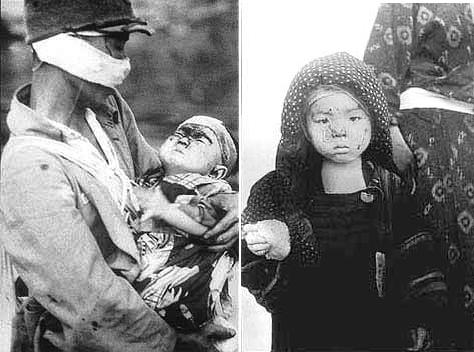
The scars that still mark Sunao Tsuboi’s face from the wartime bombing of Hiroshima are a grim reminder of the power of the atom as a wave of nuclear wariness sweeps post-Fukushima Japan.

Around 140,000 people perished instantly in the searing heat or from radiation in the days and months after a U.S. plane unleashed the deadliest weapon ever used and ushered in the nuclear age.


http://www.asianews.it/files/img/GIAPPONE_(f)_0505_-_Nucleare.jpg
Nearly seven decades later, Tsuboi, one of a dwindling number of survivors of the first ever atomic attack, is raising his voice against nuclear power in a country still reeling from the tsunami-sparked catastrophe of March 2011.

“In terms of being nuclear victims, we are the same,” Tsuboi, 87, said of those affected by the Fukushima crisis.

He was on his way to university when the bomb exploded over Hiroshima in a flash of blinding light and intense heat on Aug 6, 1945.


http://www.thecanadiancharger.com/uploads/foto1.jpg
As well as his burns, Tsuboi has also suffered intestinal cancer that may be linked to radiation exposure, and says he sees little difference in the dangers posed by atomic weapons and atomic power.
“Nuclear technology is beyond human wisdom… I still want to see a nuclear-free world while I’m alive,” he said.

His appeal comes as a bitter debate swirls over the future of Japan’s 50 remaining reactors, which once met around a third of the country’s electricity needs, but which were shuttered following the meltdowns at Fukushima.

http://www.exploratorium.edu/nagasaki/journey/07.jpg
Fears of electricity shortages have led to the government ordering restarts at two reactors, despite an increasingly vocal anti-nuclear movement in a country largely unused to public protest.
Those who experienced the World War II bombing in Hiroshima and a similar attack on the port city of Nagasaki three days later, said television images of the Fukushima crisis brought back terrible memories.
“The TV reminded me of the dreadful scenes,” said a sobbing Misako Katani, 82, one of just a few living victims who survived both bombings.

http://www.exploratorium.edu/nagasaki/journey/30.jpg
http://www.exploratorium.edu/nagasaki/journey/07.jpg
No one is officially recorded as having died as a result of the Fukushima disaster, but many who fled the area and those who remain, including workers decommissioning the crippled plant, worry about the long-term effects.

The quake-sparked tsunami knocked out the reactors’ cooling systems, causing meltdowns that spread radiation over a large area and forced thousands to evacuate.

Scientists have warned it could be decades before it is safe for some people to return to their homes.
[a-bomb-hiroshima-victim-1.jpg]
http://1.bp.blogspot.com/_kttNrkCNLWo/SnvX
0qDBPmI/AAAAAAAACUE/c5sm133EjT0/s1600/a-
bomb-hiroshima-victim-1.jpg
Sachiko Sato, a Fukushima evacuee who was among tens of thousands of people attending an annual Hiroshima commemoration event on Monday, said: “I think we can share the same sadness with people in Hiroshima and Nagasaki.

“In my mind, Fukushima is like a third nuclear victim following Hiroshima and Nagasaki.”
Atom bomb survivor Toshiyuki Mimaki, 70, added: “We want to work together with people in Fukushima and join our voices in calling for no more nuclear victims.”

But for some aging victims, there are few parallels between 1945 and 2011.

EVACUATE FUKUSHIMA 福島の子供を守れ
http://evacuatefukushimanow.files.wordpress.com
/2011/09/koriyama-obachan.jpg?w=300&h=204
“There is nothing to compare to what I experienced,” said Shigeji Yonekura, 79, who was at Hiroshima.
“The atomic bomb was dropped in war and no one helped us, while the Fukushima accident occurred in peace time and a lot of people offered help.”

Supporters of the nuclear attacks on Japan maintain they brought a quick end to the war by speeding up Tokyo’s surrender, preventing millions more casualties from a land invasion planned for later in the year.
Despite his own experience, Yonekura is resigned to the possibility that resource-poor Japan may not be able to abandon atomic power altogether.

“Nuclear power may be a necessary evil,” he said.

But Miyako Jodai, a survivor of the Nagasaki bombing, which killed 70,000 people, said the Fukushima accident and the way the crisis was managed had turned her against atomic energy.
Several reports on the accident have heaped criticism on government and plant officials, with one parliamentary probe calling Fukushima a “man-made disaster”.

“I had been convinced that peaceful use of nuclear power should be accepted because reactors were safe,” said Jodai.

“But after seeing the accident and the government’s handling of the aftermath, I felt I was betrayed.”

Original: 
http://www.japantoday.com/category/national/view/a-bomb-survivors-warn-against-nuclear-power

The Return of the Bomb - Hiroshima and Nagasaki: Just the beginning …?http://garizo.blogspot.com.au/2009/08/return-of-bomb-hiroshima-and-nagasaki.html 

Hibakusha and Ogres – part1 

ttp://evacuatefukushimanow.wordpress.com/2011/09/30/hibakusha-and-ogres-part1/ 

Nuclear Free Planeth  http://nuclearfreeplanet.org/

Dr Helen Caldicott   https://www.facebook.com/pages/Dr-Helen-Caldicott/102772801940 


From Hiroshima to Fukushima 從廣島到福島


Hidden Japan through the eyes of  a legendary Photographer,  Kikujiro Fukushima

出生1921年在山口縣,福島菊次郎來到東京,在1960年開始他的職業生涯,作為一個專業攝影師。他的職業生涯中的關鍵主題,包括核轟炸,社會和政治事務,軍事問題和環境議題他已出版的攝影集,包括原子彈:原子彈爆炸倖存者的記錄,數量以及一些散文和評論。他不屬於任何政黨,他也沒有任何政治派別。他目前他的狗住在山口縣柳井正

Born in 1921 in Yamaguchi Prefecture, Kikujiro Fukushima came to Tokyo in 1960 and started his career as a professional photographer. The key themes of his career include the nuclear bombings, social and political affairs, military issues and environmental topics. He has published a number of photo collections, including “Atomic Bomb: Record of an Atomic Bomb Survivor,” as well as several essays and commentaries. He does not belong to any political party nor has he any political affiliation. He currently lives in Yanai, Yamaguchi Prefecture, with his dog.
http://ajw.asahi.com/appendix/feature/Kikujiro%20Special_files/nippon.avi_000041000.jpg


From the documentary film “JAPAN LIES”
When Fukushima first set foot in areas of Fukushima Prefecture designated off-limits, the photographer says he thought to himself: "A tragedy is about to unfold in Fukushima. Something like Hiroshima has happened in a similar way and could be swept under the rug in a similar way."  

福島第一腳,福島縣指定的禁地地區攝影師說,他心想:“一場悲劇即將展現在福島廣島的東西已經發生類似的方式可以根據地毯橫掃。以類似的方式


Fukushima started his career in Hiroshima immediately after the end of World War II. He photographed hibakusha who were “abandoned” by their own government for more than 10 years and uncovered the “hidden side of Hiroshima.” Since then, the central theme of his professional career has been “nuclear.”

福島廣島二戰結束立即開始他的職業生涯。他拍下被自己的政府“拋棄10年以上,並發現了廣島不為人知的一面。”從那時起,他職業生涯的主題一直是核子。


The first subject of Fukushima’s pictures were weeds on the compound of what is now the Atomic Bomb Dome—the only structure that remained standing where the atomic bomb exploded on Aug. 6, 1945.

福島的第一個圖片主題化合物野草, 也就是現在原子彈圓頂---原子彈在1945年8月6日爆炸後, 唯一仍然矗立的結構.


One day, Fukushima became acquainted with Sugimatsu Nakamura, an impoverished and enfeebled survivor of the atomic bombing.

有一天,福島熟悉了Sugimatsu村,原子彈轟炸的貧困衰弱倖存者


photo by Kikujiro Fukushima


Fukushima tried to photograph a staggering Nakamura from behind. But Nakamura turned around and glared at Fukushima. The photographer recalled: “I just can’t forget the way he looked at me. I had practically frozen and could not bring myself to press the shutter for several years. I just could not get up the courage to photograph him. He did not want to be photographed, either.”

福島試圖從背後拍攝驚人的村。但中村轉身,怒視福島。攝影師回憶說:“我不能忘記他看著我方式實際上已經凍結,幾年無法讓自己按快門。我就是不能鼓起勇氣拍攝他也不想被拍到


photo by Kikujiro Fukushima


Although Nakamura was suffering from radiation illness, he had to work as a fisherman to make ends meet. His wife had just died of radiation illnesses, and he had six children, including infants, to feed.

雖然中村遭受輻射疾病,他工作作為一個漁民入不敷出。他的妻子剛剛因輻射疾病去世他有六個孩子包括嬰兒要養


One day, Nakamura came to Fukushima and broke down in tears: “There is one thing I want you to do for me. Please take revenge for me. Please take my photos. Look at me. This is how I am now because of the atomic bomb attack. I just can’t let myself die like this.”

有一天,中村福島和泣不成聲:“有一件事我想讓你為我做的。請為我報仇。請把我的照片看著我。這是如何,我現在因為原子彈攻擊我不能讓自己這樣死了


After his fishing work was done, an exhausted Nakamura was taken to his house by his fellow fishermen. Although it was in the middle of summer, he complained of bad chills and was shaking, biting the edge of his futon.

他的捕魚工作完成後,疲憊的由他的漁夫同伴送回家。雖然是在夏季中抱怨畏寒渾身發抖,咬著他的被褥邊緣
  

Nakamura kept tossing and turning while shouting, “My body is burning and my head is splitting.”

不停地輾轉反側一邊喊著,“我的身體在燃燒,我的頭要開了


Nakamura told Fukushima not to take pictures of the more than 80 scars from razor cuts on the inside of his thigh. But Fukushima kept seeking permission. In the end, Nakamura’s resistance wore down and he let Fukushima have his way.

中村告知福島不要拍他大腿內側被剃鬍刀削割超過80道疤痕的照片。但福島不斷尋求許可。最後,中村的抵抗力被拖垮,他[順從福島。


Nakamura had cut himself on the thigh thinking that the pain would help him forget the agony and misery of his life.

自己割了自己大腿,心想肉體痛會幫助他忘記了他痛苦一生苦難


Around that time, the Atomic Bomb Casualty Commission (ABCC), jointly run by the United States and Japan, was conducting research on the power of nuclear bombing, the survivors and radiation illnesses. ABCC officials showed up at funerals and carried the bodies to research labs. Nakamura allowed the ABCC to take the body of his wife. The ABCC dissected more than 5,000 bodies for two years from 1948. The results of the extensive research became part of the vast data and reference materials for the U.S. nuclear development program.

在這段時間,原子彈傷亡委員會(ABCC),由美國和日本聯手,對核轟炸倖存者輻射疾病的影響力進行研究。 ABCC官員出現在葬禮上,並將屍體搬到實驗室進行研究。中村允許ABCC拿他妻子的遺體。從1948年兩年ABCC解剖5000多具屍體。廣泛的研究結果成為美國的核發展計劃的大量數據和參考材料一部分


Nakamura died on Jan. 1, 1967, the scars on his thigh symbolizing his hatred of the atomic bombing.


死於1967年1月1日, 他的大腿傷疤,象徵著他對原子彈轟炸仇恨


Fukushima says about his photo series of Nakamura, “It is the joint work between Nakamura and me. … Our obsessional tenacity and insanity, so to speak, helped us create the work.”

福島說,關於他的照片中村系列,這是我和中村之間的聯合工作。我們強迫的執著和瘋狂這麼說吧,幫助我們創建工作


After hearing about Nakamura’s death, Fukushima visited his house in Hiroshima. When he arrived, Na中文翻譯kamura’s eldest son yelled, “Go home!” Fukushima knew why the son was so upset: He had photographed Nakamura and his family members without paying attention to how this made them feel. The son’s yelling came as a shock and made the photographer reflect on his behavior. Fukushima says he felt more shocked then than the times he was taking Nakamura’s photos. Standing in front of Nakamura’s gravestone, Fukushima asked himself if he had really taken “revenge” for Nakamura by snapping his photos and publishing them. But no answer came back from the grave.

聽到中村死亡,福島重返廣島他的房子。當他到達時,中村的長子大叫,回家”福島知道為什麼中村兒子不高興了:他拍攝了中村,而不注重中村和他家人的感覺。兒子的叫喊震驚攝影師對他的行為反映福島說,他感到拍攝中的照片時更加震驚。站在的墓碑,福島問自己,拍攝他的照片 並發表, 是否真的幫中村復仇但沒有答案從墳    墓出來 


Fukushima says: “If I had never met Nakamura, I would not have been what I am today. He sowed the seeds for me, so to speak, and they had grown into a big tree, meaning that he made me open my eyes to the injustices in society.” Fukushima’s encounter with Nakamura marked the beginning of his long career as a photojournalist who tackled many social issues.


福島說:“如果我從未謀面,我不會是今天的我。他幫我播下了種子,我可以這麼說,而且他們已經一棵大樹,這意味著,他打開我的眼睛看見社會上的不公正。福島和相遇​​,一名攝影記者開始他漫長的職業生涯畫下標誌, 揭發報導了許多社會問題。


( Read more...)   Source.
http://ajw.asahi.com/appendix/feature/Kikujiro_Special.html
 (中文翻譯 Chinese Translation )
http://translate.google.com/translate?sl=auto&tl=zh-TW&js=n&prev=_t&hl=en&ie=UTF-8&layout=2&eotf=1&u=http%3A%2F%2Fajw.asahi.com%2Fappendix%2Ffeature%2FKikujiro_Special.html